In 1954 Huxley recorded his experiences in the landmark book The Doors of Perception; the title was drawn from a quotation by British artist and poet William Blake. Huxley tried LSD for the first time in 1955, obtained from “Captain” Al Hubbard. Sandoz halted LSD production in August 1965 after growing governmental protests at its proliferation among the general populace. The National Institute of Mental Health in the United States distributed LSD on a limited basis for scientific research. Scientific study of LSD largely ceased by about 1980 as research funding declined, and governments became wary of permitting such research, fearing that the results of the research might encourage illicit LSD use. By the end of the 20th century, there were few authorized researchers left, and their efforts were mostly directed towards establishing approved protocols for further work with LSD in easing the suffering of the dying and with drug addicts and alcoholics.
Drugs Smuggled In Baby’s Corpse
1P-LSD produces cross-tolerance with all psychedelics, meaning that after the use of 1P-LSD they will have a reduced effect. Anecdotal reports suggest that there are no negative health effects attributed to simply trying 1P-LSD by itself, at low to moderate doses, and using it very sparingly (although nothing can be completely guaranteed). Independent research should always be conducted to ensure that a combination of two or more substances is safe before consumption. The toxicity and long-term health effects of recreational 1P-LSD use have not been studied. This is because 1P-LSD is a research chemical with almost no history of human use. LSD became a headline item in early 1967, and the Beatles admitted to having been under the influence of LSD.
Mixing LSD With Other Drugs
However, there is currently no experimental data to support these claims. Stable for moderate periods of time under normal temperatures and pressures. Thermal decomposition products of LSD when stored in massive quantities may include dangerous amounts of toxic oxides, carbon, and nitrogen.
Users who get out of control, or who try to harm themselves, should be taken for medical help. During the 1960s and early 1970s, the drug culture adopted LSD as the psychedelic drug of choice, particularly amongst the hippie community. However, LSD dramatically decreased in popularity in the mid-1970s (see above graph which covers the period 1967–2008). This decline was due to negative publicity centred on side-effects of LSD use, its criminalization, and the increasing effectiveness of drug law enforcement efforts, rather than new medical information.
Psychedelic Subculture Goes Mainstream
- In the 1960s LSD was proposed for use in the treatment of neuroses, especially for patients who were recalcitrant to more conventional psychotherapeutic procedures.
- However, using non-prescribed drugs, using non-prescribed dose regimen, can cause polysubstance dependence, or combined drug intoxication which may lead to deaths.
- You may have hallucinations that cause anxiety, terror, thoughts of suicide, or fear of death.
- The first intentional ingestion was recorded on April 19, 1943.20 Hofmann ingested 250 micrograms (µg) of LSD, believing it would be a threshold dose based on the doses of other ergot alkaloids.
- Anecdotal reports suggest that there are no negative health effects attributed to simply trying 1P-LSD by itself, at low to moderate doses, and using it very sparingly (although nothing can be completely guaranteed).
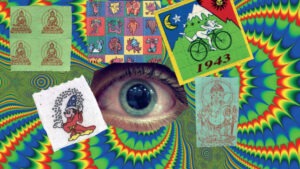
LSD is often consumed in the form of small paper “tabs” containing the substance, though occasionally it is also dissolved in a solution for more precise volumetric dosing. The dosage is measured in micrograms, with typical microdoses measuring anywhere between 5μg to 20μg and therapeutic or recreational doses generally starting at 100μg and above. At microdose levels where the substance is taken at sub-perceptual levels for nootropic effects, users report feelings of energy and enhanced creativity. Since LSD is not an approved drug, its therapeutic applications are regarded as experimental. In the 1960s LSD was proposed for use in the treatment of neuroses, especially for patients who were recalcitrant to more conventional psychotherapeutic procedures.
Influential Individuals
If scientists can figure out the reason why it affects your brain like this, it could potentially help treat other conditions in a safe and effective way. During the 1960s LSD (“acid”) became popular within the hippie subculture that emerged in the United States and western Europe. One critical pioneer in that movement was Augustus Owsley Stanley III, a California-based underground chemist who manufactured several million doses of the drug. Stanley’s efforts supplied the drug to several figures who would become advocates for LSD, including novelist Ken Kesey. Stanley also was a personal supplier of LSD to the Grateful Dead (for whom he also provided early financial support and served as sound engineer). Unlike other highly prohibited psychoactive substances, LSD has no known toxic dose; it is effectively impossible to physically overdose on.
Within the first hour after taking LSD, you might start seeing things and experience mood swings with extreme highs and lows. Your sense of time, space, color, and even your own body can get twisted. Internationally, the UN 1971 Convention on Psychotropic Substances requires its parties to prohibit LSD. Hence, it is illegal in all parties to the convention, which includes the United States, Australia, New Zealand, and most of Europe.
Psychiatric Use
Frank Olson’s family received $750,000 by a special act of Congress, and both President Ford and CIA director William Colby met with Olson’s family to apologize publicly. However, there is no evidence that this actually has effects different from a placebo, or that a significant number of users or dealers were ever actually doing this. This legend, which surfaced on the Internet just in time for Halloween in October 2004, claimed that drug dealers were giving lollipops laced with drugs, typically a combination of THC and PCP, to unsuspecting children and causing them great harm. Such suckers are allegedly referred to as “dro pops” or something to that effect, and various towns around the country have had their own versions of the legend.105 According to the U.S. DEA, suckers containing THC and/or PCP were found and confiscated in Chicago in the spring of 2004. They also report that in 2003 and 2004 some psilocybin mushroom chocolate candies were seized near Amarillo, Texas,106 and that hollowed-out lollipops filled with heroin have been seized in New York City.107 The goal of doing so was likely to evade detection by law enforcement by disguising the drugs as candy.
Psychedelic Tourism
- These mystical experiences are defined by a sense of oneness or unity with the surrounding world.
- The songs “She Said She Said” and “Tomorrow Never Knows” from the Beatles’ Revolver album explicitly reference LSD trips, and many lines of “Tomorrow Never Knows” were borrowed from Timothy Leary’s book The Psychedelic Experience.
- The estimated LD50 (dose at which 50% of subjects die) for humans is estimated at 12,000-14,000mcg LSD.
- Frank Olson’s family received $750,000 by a special act of Congress, and both President Ford and CIA director William Colby met with Olson’s family to apologize publicly.
- This is because 1P-LSD is a research chemical with almost no history of human use.
Britain was also investigating the possible use of LSD and the chemical BZ (3-quinuclidinyl benzilate) as nonlethal battlefield drug-weapons.1 The United States eventually weaponized BZ for delivery in the M43 BZ cluster bomb until stocks were destroyed in 1989. Both the US and Britain concluded that the desired effects of drug weapons were unpredictable under battlefield conditions and gave up experimentation. One possible reason people believe that they had “bad acid” could be because they were simply sold a much higher dose than usual, which is not uncommon due to the inherent lack of quality control of illicit drugs, and with LSD in particular being effective at microgram rather than milligram doses. The stronger the dose, the stronger and potentially more anxiety-provoking the trip can get. But in the case of the “brown acid” it was the liquid the LSD was contained within that had evaporated thus increasing the dose per drop as LSD does not evaporate. If you are not ready to take higher doses, microdosing is a way to go because it can bring similar benefits to your life with even fewer side effects.Experts in the field generally recommend microdosing with µg every 3rd day.
Lysergic Acid Diethylamide
Like LSD rumors, many were spread during the 1960s and 1970s, and are believed to continuously circulate today. These widespread legends claim that it is easy to overdose on the smokeable variant of cannabis and that it is extremely dangerous and addictive when compared to alcohol and tobacco. A common rumor states that menthol cigarettes or their filters contain fiberglass. To avoid an excessively long list, the table below only lists recreational drug combinations that are not patent medicine.
Psychedelic Therapy
It is active at extremely low doses and is most commonly available on blotter or in liquid form. Beginning in 1967, studies raised concerns that LSD might produce genetic damage29 or developmental abnormalities in fetuses. However, these initial reports were based on in vitro studies or were poorly controlled and have not been substantiated. In studies of chromosomal changes in human users and in monkeys, the balance of evidence suggests no increase in chromosomal damage. For example, white blood cells of people who had been given LSD in a clinical setting were examined for visible chromosomal abnormalities; overall, there appeared to be no lasting changes.29 Several studies have been conducted using illicit LSD users and provide a less clear picture.
Archeologists believe humans have used these “magic mushrooms” since prehistoric times. Depending on how much a person takes or how their brain responds, a trip can be pleasurable and enlightening, or, during a “bad trip,” a user may have terrifying thoughts or feel out of control. LSD is just one mind-altering substance in a class of drugs called hallucinogens, which cause people to have hallucinations—things that someone sees, hears or feels that appear to be real but are in fact created by the mind. LSD is probably one of the most mythologized and demonised drugs, and its history is full of episodes which are as outlandish as the stories, such as the illegal experiments with the drug carried out by American and British intelligence agencies. Countless urban myths exist about bizarre and frightening things people did whilst tripping. There is less medical research into LSD (acid) vs psilocybin (shrooms), because psilocybin is less stigmatized, and psilocybin also has a shorter duration, which is easier for researchers as with psilocybin they can spend more like 8 hours with a participant instead of having to spend ~16 hours with the participant.